
Importance of a surge protector for HVAC Equipment
In the HVAC field, our expertise must cover more than compressors, coils, and refrigerant lines. The quality and stability of the electrical supply play a major role in how long a system performs reliably. Power disturbances and voltage spikes can silently damage equipment, leading to avoidable breakdowns and callback. Implementing proper voltage protection is a smart, preventative approach that strengthens system durability and protects our work. In this guide, we’ll examine why surge protection matters, explore a line-voltage surge protector as a real-world solution, and walk through the steps required to install it correctly.
Electrical Hazards: How Voltage Variations Affect HVAC Systems
Electrical systems are intended to deliver stable, consistent voltage, but real-world power conditions are often unpredictable. Voltage irregularities can put serious stress on an HVAC system’s most critical and expensive components.
Low Voltage (Brownouts):
When voltage drops below safe operating levels, motors and compressors can overheat and suffer premature damage. A voltage protection device detects these conditions and disconnects power to prevent harm.
High Voltage (Surges):
Sudden voltage spikes caused by lightning or utility disturbances can damage sensitive electronics. An HVAC surge protection device monitors incoming power and limits or interrupts excessive voltage to help protect the system from failure.
Getting Started: An Overview of an HVAC Surge Protection Device
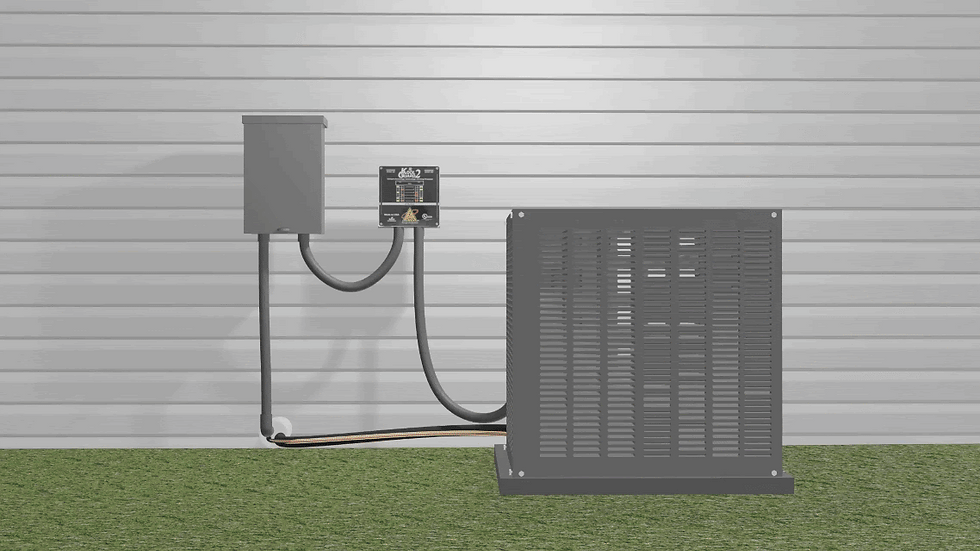
For this example, we’ll examine a dedicated HVAC surge protection device designed to provide proactive defense against electrical disturbances. This heavy-duty unit is installed in series—meaning power flows through the device before reaching the equipment—allowing it to monitor and control incoming voltage. It is suitable for systems rated up to 40A minimum circuit ampacity (MCA) and compatible with both 120/240V AC and 120/208V AC split-phase configurations. Housed in a NEMA 4X-rated enclosure, it is built to withstand outdoor conditions.
Pre-Installation Checklist
1. Shut off power at the breaker and verify with a meter.
2. Mount location: Install between the safety disconnect and the HVAC unit.
3. Confirm rating: Ensure the circuit amperage does not exceed the device’s capacity.
Basic Installation Steps
1. Mount and Run Conduit
Secure the NEMA 4X-rated enclosure (approved for outdoor use). Run conduit from the disconnect to the device, then to the HVAC unit.

2. Wire in Series
Connect incoming power from the disconnect to the device’s input terminals and ground.

Connect the device’s output terminals to the HVAC equipment.

3. Restore Power and Check Indicators
Re-energize the breaker. Diagnostic LEDs will confirm system status.
LED Status Guide
Solid green (both phases): Normal voltage, system protected.
Slow blink: Low-voltage fault.
Fast blink: High-voltage fault.
Most units include a restart delay (typically around 3 minutes) to prevent compressor short-cycling after a fault.
Final Note
Voltage protection is a key part of a professional HVAC installation. Brownouts and surges can cause premature failures and costly callback. Installing a properly rated surge protection device adds reliability, protects equipment, and strengthens your reputation for delivering durable, high-quality work.
